
PP Demister Pad
PP Demister Pad by Mitro Industries for efficient gas-liquid separation. Lightweight, corrosion-resistant PP knitted mesh demisters for columns, scrubbers, cooling towers, and chemical processes. View Complete Details...
₹ 9000/Set
Product Specification
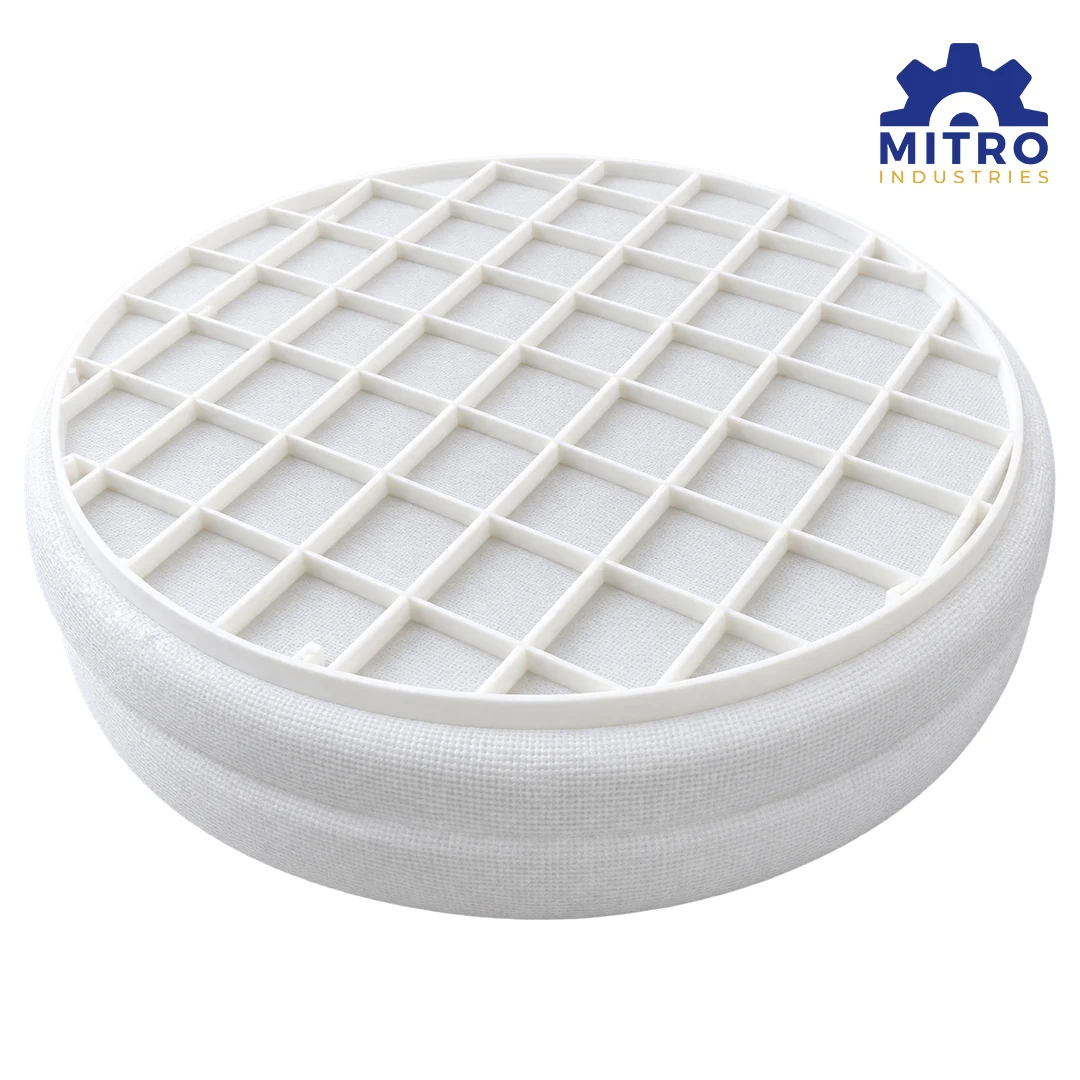
PP Demister Pad by Mitro Industries is a lightweight, corrosion-resistant mist eliminator designed for efficient gas-liquid separation in industrial processes. Manufactured using high-quality polypropylene (PP) knitted mesh, the demister pad captures suspended liquid droplets, mist, and fine aerosols from gas streams while maintaining low pressure drop and high separation efficiency.
PP demister pads are commonly installed in columns, scrubbers, cooling towers, separation equipment, and other process vessels where efficient removal of entrained liquids is required. A properly designed demister pad helps reduce liquid carryover, minimize material losses, improve process efficiency, and protect downstream equipment.
Mitro Industries offers PP demister pad solutions in different shapes, sizes, mesh configurations, and support arrangements to meet specific industrial requirements.
What Is a PP Demister Pad?
A Polypropylene (PP) Demister Pad is a knitted mesh mist eliminator used to remove liquid droplets from a flowing gas or vapor stream. As the gas passes through the densely knitted PP mesh, liquid droplets collide with the mesh filaments, coalesce into larger droplets, and drain downward under gravity.
The demister pad can capture both relatively large entrained droplets and smaller liquid mist, depending on the mesh density, thickness, operating velocity, droplet size, and process conditions.
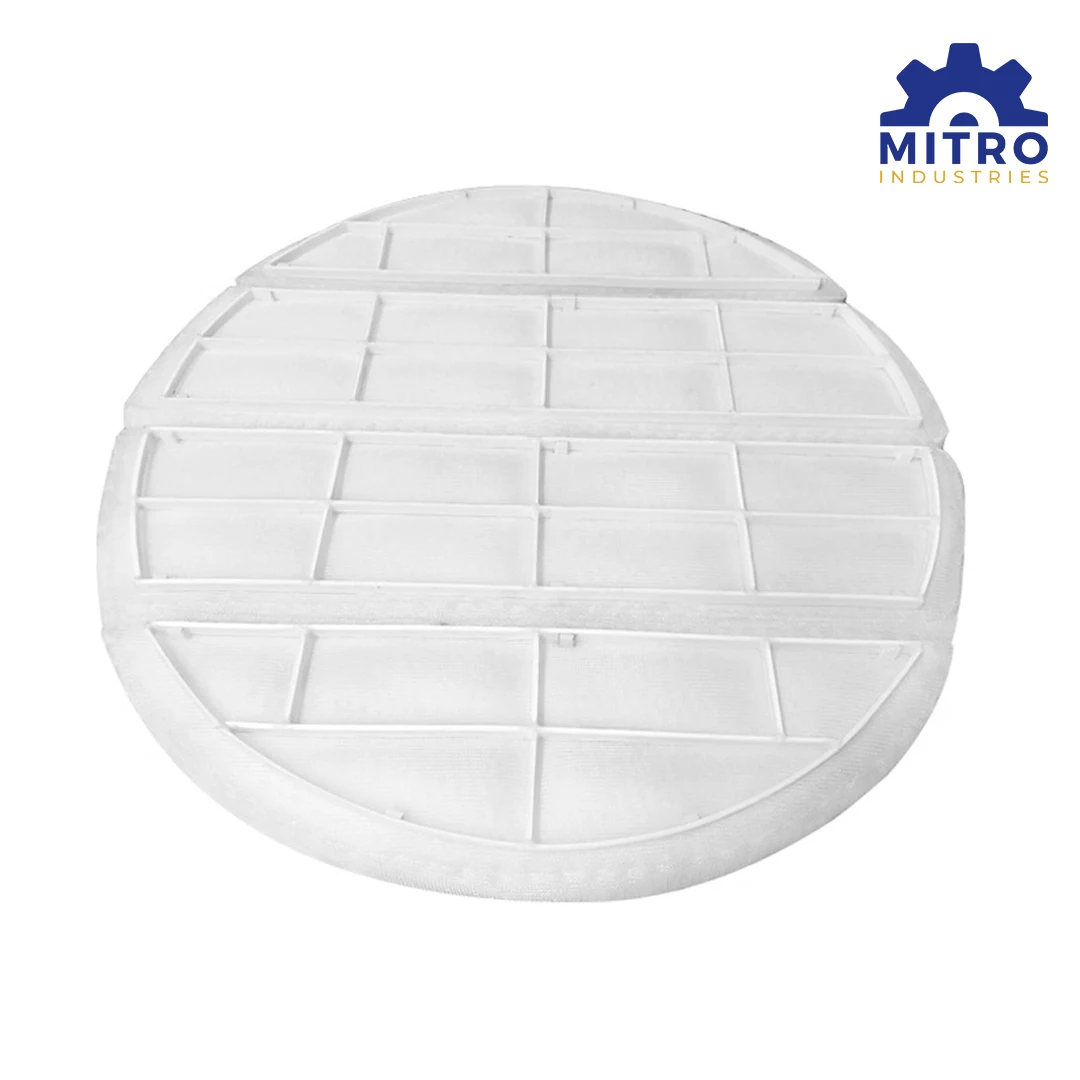
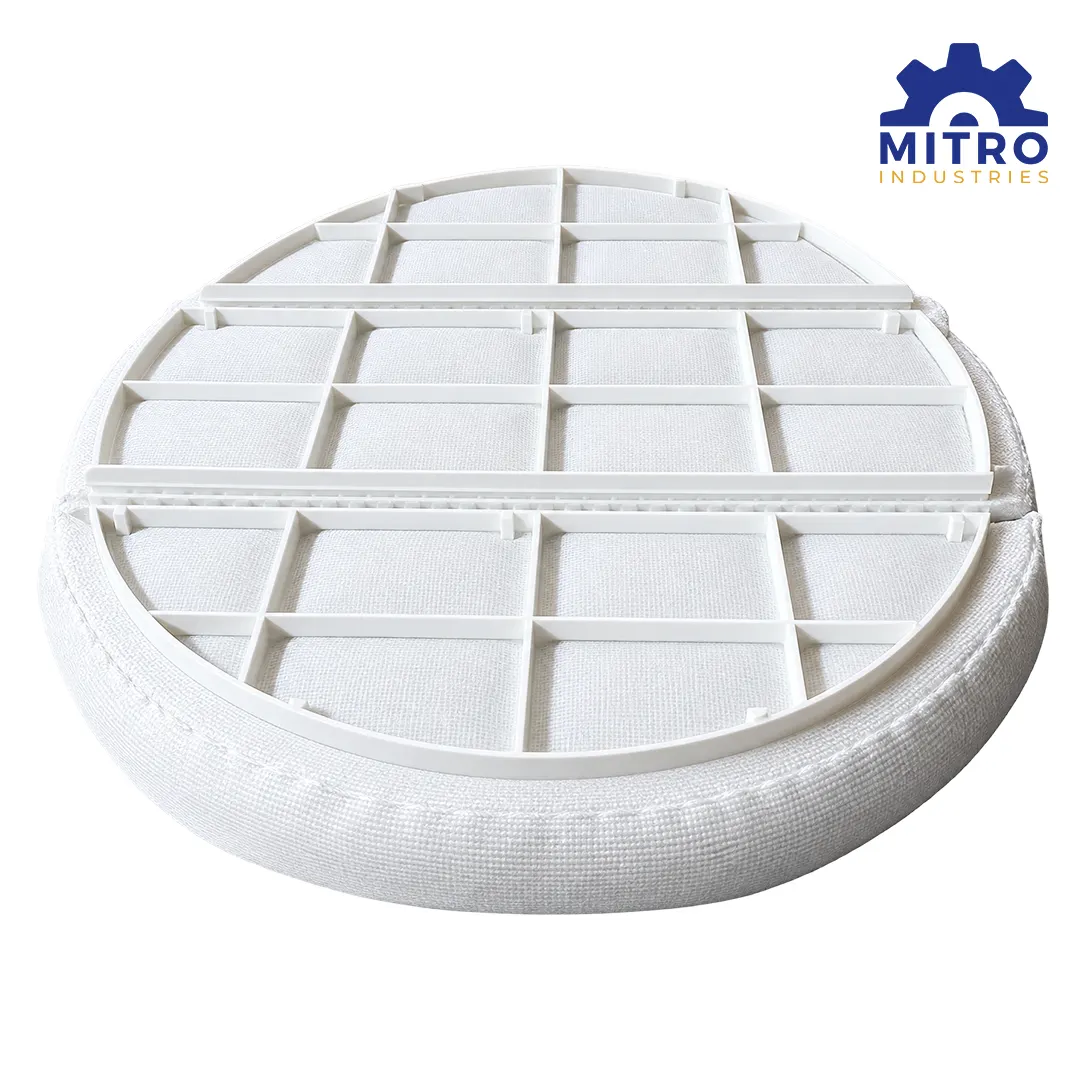
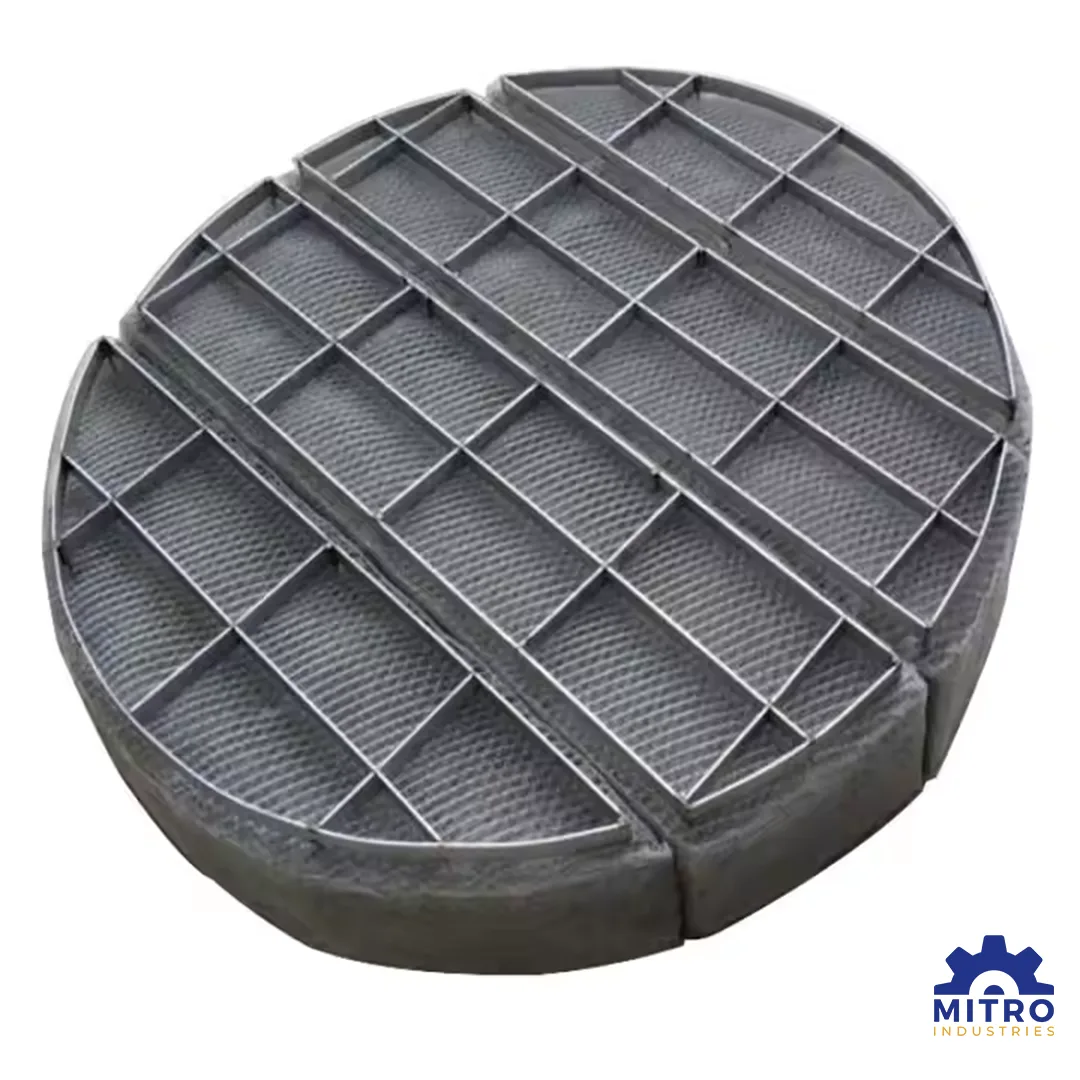
Support grids or gratings are installed with the mesh pad to provide mechanical strength, maintain the required shape, and simplify installation and removal.
PP Demister Pad Construction
A typical PP demister pad consists of
• PP knitted wire mesh for mist and droplet separation
• PP support grids for structural support
• Stainless steel or other compatible grids, where required by the application
• Custom-fabricated supports, retainers, and shapes according to vessel requirements
The combination of knitted mesh and support grids provides a simple, lightweight, and effective solution for gas-liquid separation.
Types of PP Demister Pads
PP demister pads can be manufactured in different configurations according to vessel design and application requirements.
Round PP Demister Pad
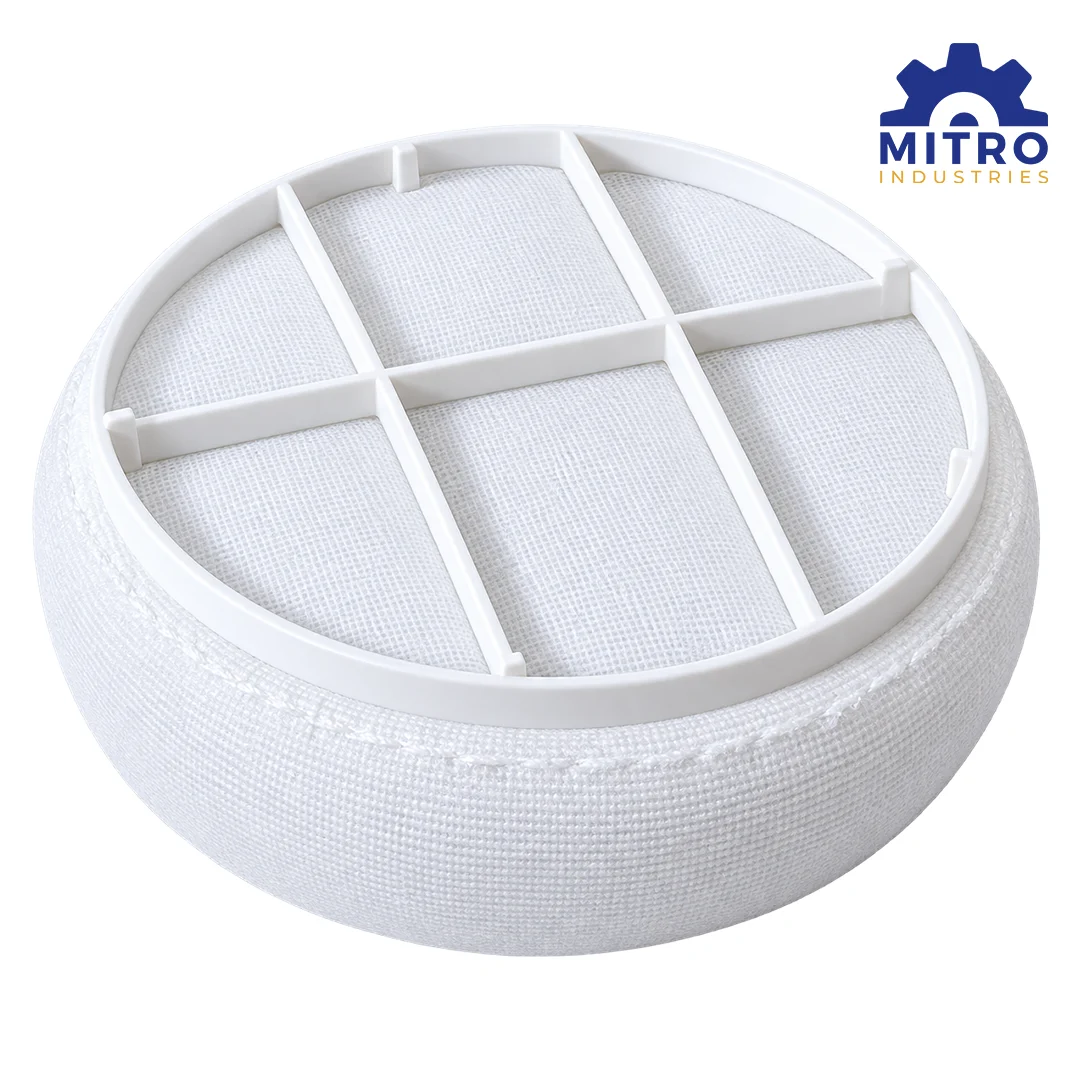
Round demister pads are commonly used in cylindrical vessels, towers, scrubbers, and process columns. They can be manufactured according to the required vessel diameter.
Rectangular PP Demister Pad
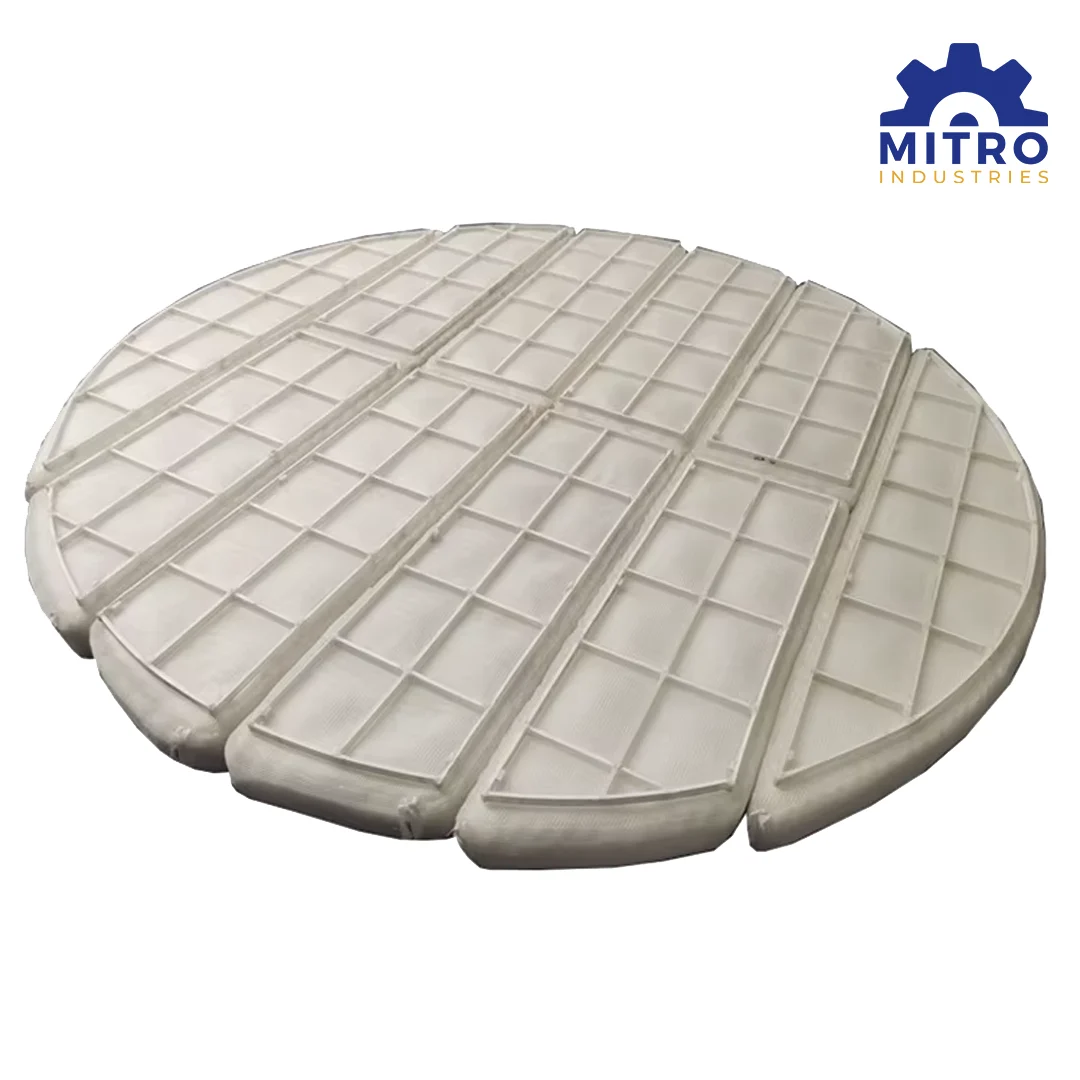
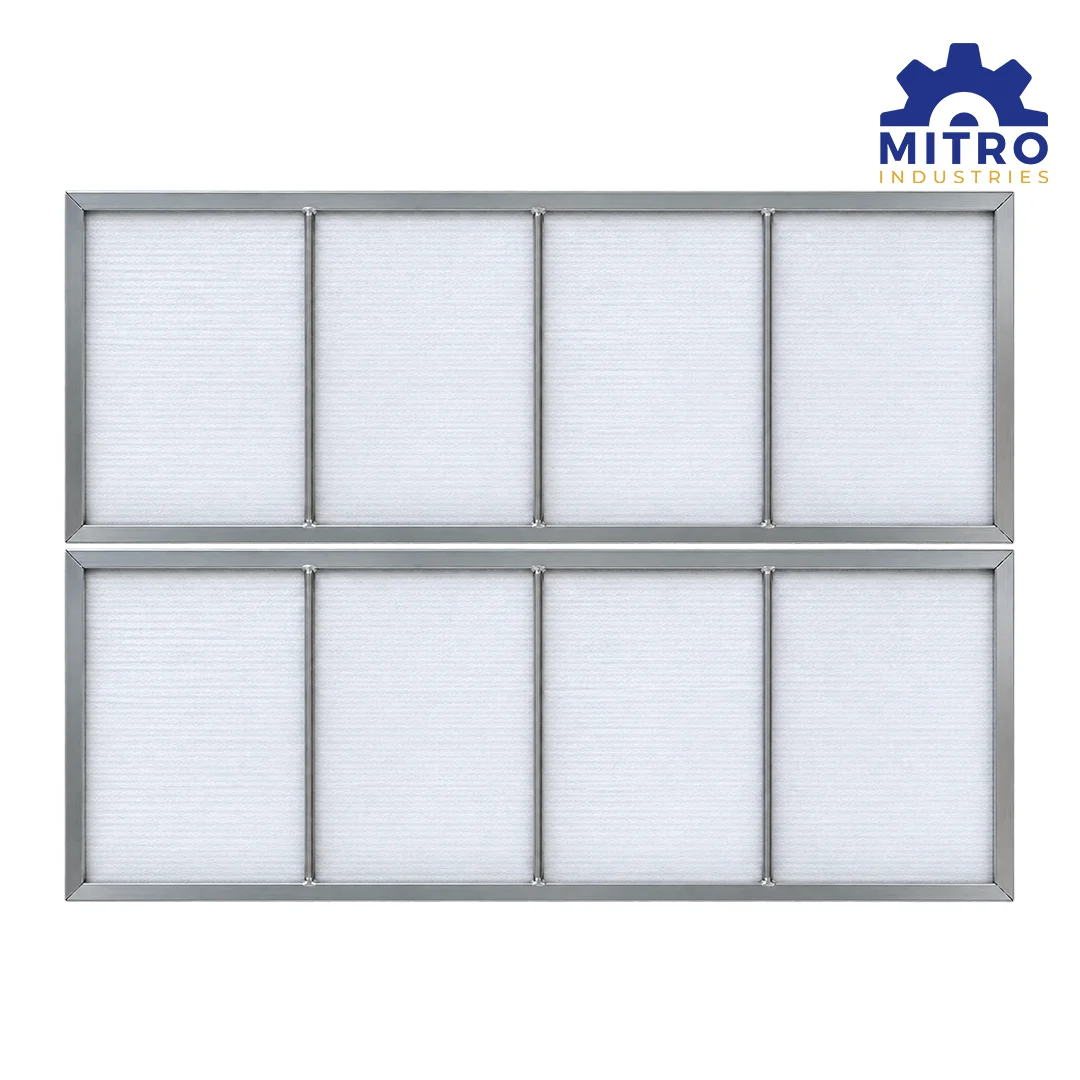
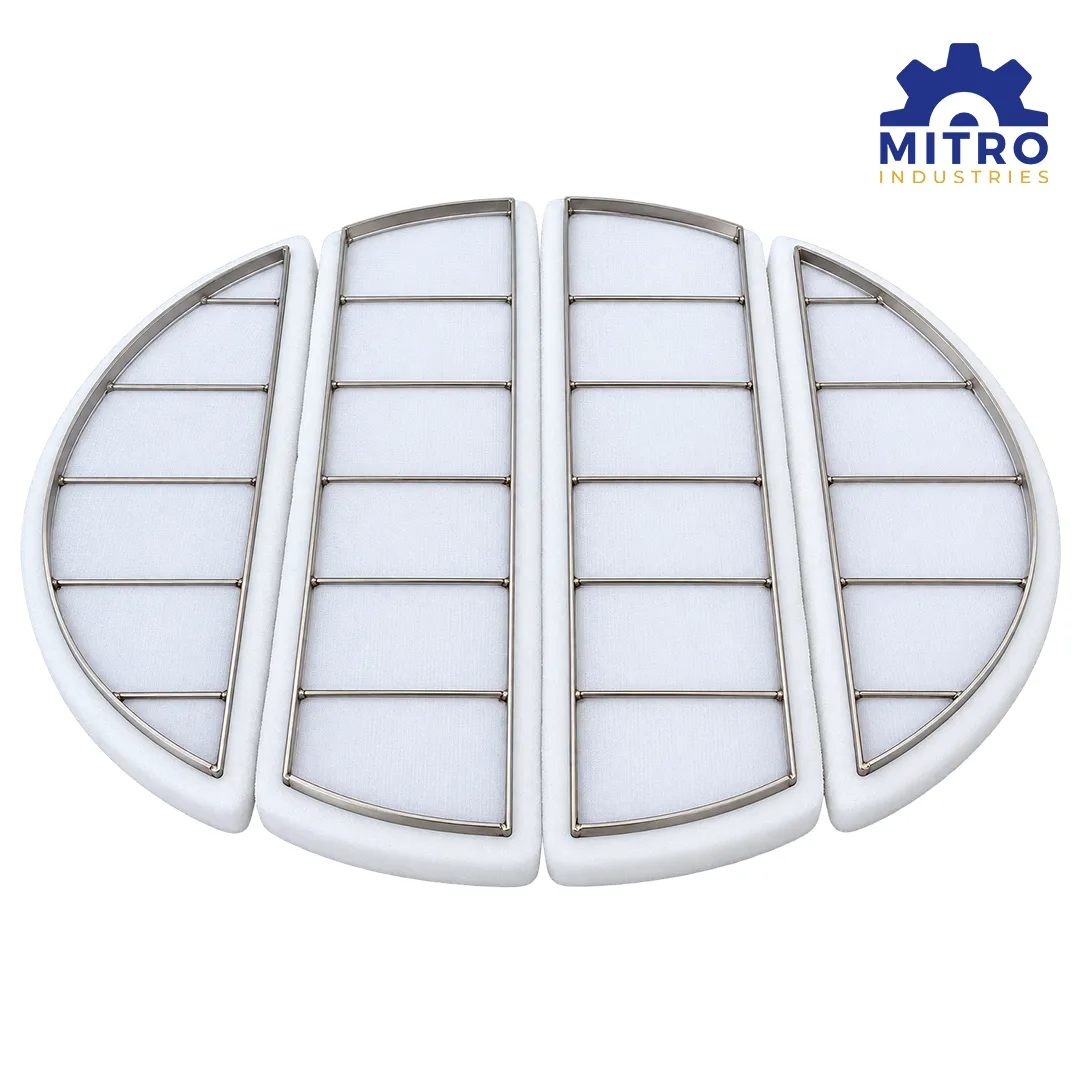
Rectangular demister pads are suitable for vessels and equipment with rectangular or customized internal dimensions. Multiple sections can also be used where a single-piece pad is not practical.
Ring-Shaped PP Demister Pad
Ring-shaped demister pads are designed for specialized vessel configurations and applications where the internal equipment arrangement requires a central opening or annular design.
Key Features of PP Demister Pad
PP demister pads provide several advantages for industrial gas-liquid separation
• Lightweight construction : Polypropylene has a low density of approximately 0.90–0.91 g/cm³.
• Excellent corrosion resistance : PP provides good resistance to many acids, alkalis, salts, and chemical environments.
• High separation efficiency : The knitted mesh structure promotes droplet capture and coalescence.
• Low pressure drop : The open mesh structure allows gas to pass through with relatively low resistance.
• High porosity : Large open area supports efficient gas flow.
• Good mechanical strength : Support grids provide stability to the mesh pad.
• Excellent elasticity : PP mesh can accommodate handling and installation requirements.
• Non-conductive and non-magnetic : Useful in applications where these properties are required.
• Easy installation and removal : Lightweight construction simplifies handling and maintenance.
• Customizable design : Pads can be produced in different shapes, dimensions, thicknesses, and mesh configurations.
• Long service life : Suitable for applications within the recommended operating conditions of polypropylene.
Temperature Resistance of PP Demister Pad
Temperature resistance is an important consideration when selecting a PP demister pad.
Polypropylene can withstand elevated temperatures, but its practical operating temperature depends on the chemical environment, pressure, mechanical loading, mesh construction, and duration of exposure. For many industrial applications, 80–100°C is a conservative practical operating range, while certain PP materials and designs may tolerate higher temperatures for specific applications.
For continuous operation, the actual process temperature should always be evaluated before selecting PP as the demister material.
For high-temperature applications beyond the suitable PP range, alternative materials such as stainless steel or other engineered polymers may be more appropriate.
How Does a PP Demister Pad Work?
The working principle of a PP demister pad is based on inertial impaction, interception, coalescence, and gravity drainage.
• Gas or vapor containing entrained liquid droplets enters the demister section.
• The gas passes through the knitted PP mesh.
• Liquid droplets come into contact with the mesh filaments.
• Captured droplets combine with other droplets and form larger liquid drops.
• The larger droplets drain downward through the mesh.
• Cleaner gas exits from the upper side of the demister pad.
This process reduces liquid carryover and improves gas-liquid separation efficiency.
Applications of PP Demister Pad
PP demister pads are used in a wide range of industrial applications where corrosion resistance, low weight, and efficient mist removal are important.
Flue Gas Desulfurization
PP demister pads can be used in flue gas desulfurization systems to remove entrained droplets and mist from gas streams and help reduce liquid carryover.
Packed Columns
In packed columns, PP demisters can help remove entrained liquid droplets from the gas stream after mass-transfer operations.
Rectifying Columns
Demister pads can reduce liquid entrainment and help improve product purity and separation performance.
Separation Columns
PP demisters help remove fine liquid droplets from gas streams, supporting stable gas-liquid phase separation.
Cooling Towers
PP mist eliminators can capture water droplets carried by air, helping reduce water drift and associated water losses.
Scrubbers
PP demister pads are suitable for removing liquid droplets generated during wet scrubbing processes.
Chemical Processing
The corrosion resistance of polypropylene makes PP demisters useful in selected chemical processing applications involving compatible chemical media.
Environmental Protection Systems
PP demister pads can be used in gas-cleaning and pollution-control equipment to reduce the carryover of water, chemical solutions, mist, and other liquid contaminants.
Advantages of PP Demister Pad
Compared with many conventional demister materials, polypropylene provides a useful combination of low weight, corrosion resistance, flexibility, and cost-effectiveness.
1. Corrosion Resistance
PP is resistant to many corrosive chemicals, making it suitable for selected acidic and alkaline process environments.
2. Lightweight
The low density of polypropylene makes PP demister pads easier to transport, handle, install, and remove during maintenance.
3. Efficient Mist Removal
The knitted mesh provides a large contact area for capturing and coalescing liquid droplets.
4. Low Pressure Drop
The porous mesh structure enables gas to pass through efficiently when the demister is correctly sized for the process.
5. Easy Maintenance
The simple construction of a mesh pad and support grid makes inspection, cleaning, installation, and replacement relatively straightforward.
6. Custom Manufacturing
PP demister pads can be manufactured according to vessel diameter, dimensions, thickness, mesh density, support arrangement, and other application requirements.
7. Cost-Effective Solution
For applications compatible with polypropylene's temperature and chemical limitations, PP can provide an economical alternative to more expensive metallic materials.
PP Demister Pad Selection Guide
Selecting the correct demister pad requires more than choosing the material alone. The design should be based on the actual operating conditions of the process.
Important selection parameters include
• Gas or vapor flow rate
• Liquid flow rate
• Operating temperature
• Operating pressure
• Droplet size distribution
• Gas and liquid density
• Chemical composition
• Required separation efficiency
• Allowable pressure drop
• Vessel diameter and available installation space
• Mesh density
• Pad thickness
• Support grid material
• Cleaning and maintenance requirements
Mitro Industries can evaluate these parameters to help determine an appropriate PP demister pad configuration for a specific application.
PP Demister Pad vs Stainless Steel Demister Pad
PP and stainless steel demister pads serve similar gas-liquid separation purposes, but their material characteristics differ.
PP demister pads are generally preferred when low weight, corrosion resistance, non-metallic construction, and cost efficiency are important.
Stainless steel demister pads are generally preferred for applications requiring higher temperature resistance, greater mechanical strength, or compatibility with operating conditions beyond the practical range of polypropylene.
The correct material should therefore be selected according to the complete process environment rather than price alone.
Why Choose Mitro Industries for PP Demister Pad?
Mitro Industries focuses on providing industrial demister and gas-liquid separation solutions designed around individual application requirements.
When sourcing a PP demister pad, important considerations include material quality, mesh construction, pad dimensions, support design, separation requirements, and compatibility with the process environment.
Mitro Industries can provide customized PP demister pad configurations based on the customer's vessel dimensions and process conditions, helping users select a demister that provides an effective balance between mist removal efficiency, pressure drop, service life, installation, and cost.
Product related to Tower Packing
Find a similar products you may like

Products also required!



Product Rating & Review


Frequently Asked Question

Mitro Industries
Online
Get Chat with us!
Fill details to start your conversation